
Things to Do in Reykjavik in March
March weather, activities, events & insider tips
Low Season · Budget Friendly
March Weather in Reykjavik
Long-run averages for March
39°F (4°C)
High Temp
29°F (-1°C)
Low Temp
3.2 inches (81 mm)
Rainfall
78%
Humidity
12
Rainy Days
1
Sunny-Day UV
⚠ Sudden winter storms can develop within hours, bringing heavy snow, near-zero visibility, and wind gusts exceeding 100 km/h (62 mph). Road closures outside Reykjavik are common during storms and can last from a few hours to a full day. Always check road.is and the Icelandic Met Office forecast before leaving the city.
⚠ Black ice on pavements and roads is a daily reality through March. Sidewalks in residential areas and car parks are rarely de-iced, and the freeze-thaw cycle around 0°C (32°F) creates fresh ice patches each night. Slip-on crampons for walking and cautious driving speeds are standard precautions, not excessive ones.
⚠ Wind chill regularly drops perceived temperature 10-15°C (18-27°F) below the actual reading. A calm 2°C (36°F) afternoon feels mild. The same temperature with a 40 km/h (25 mph) wind off the ocean feels like -10°C (14°F). Exposed skin on waterfront walks, glacier hikes, and Northern Lights tours needs wind protection, not just insulation.
Is March Right for You?
Weigh the advantages and considerations before booking
Advantages
- + Northern Lights are still reliably visible through early-to-mid March, and the lengthening days mean you're not stumbling around in total darkness by 3 PM like you would be in December or January. The aurora window narrows as the month progresses. But guides know the darker corridors inland, and clear nights in early March still deliver curtains of green that ripple across the sky like silk caught in a draft.
- + Daylight expands dramatically, from roughly nine and a half hours at the start of March to nearly thirteen by month's end. That swing is something you feel physically after Iceland's winter compression. By mid-March the low-angled sun turns Hallgrimskirkja's concrete pale gold for a full hour before sunset, and the Esja mountain ridge across Faxafloi bay catches alpenglow that summer visitors never see because the sun is too high.
- + Shoulder season pricing takes the edge off what is otherwise one of Europe's most expensive destinations. Guesthouses in the 101 postcode that command premium rates in July tend to have openings in March, and rental car availability is far better than summer months when the entire Ring Road turns into a slow convoy. You're not competing with cruise ship passengers either, since the season hasn't started.
- + Ice caves in Vatnajokull and glacier formations at Solheimajokull are still accessible in early March before warming temperatures close them for the season. The blue light inside a glacial ice cave, filtered through metres of compressed ice that has been forming for centuries, has a colour that doesn't exist anywhere else on earth. Late March is a gamble for access. But early March is generally still reliable.
Considerations
- − Wind is the real adversary in March Reykjavik, not cold. The thermometer reads -1°C (29°F) on a calm morning and that feels manageable. Add a 50 km/h (31 mph) gust off Faxafloi bay and the wind chill drops well below -10°C (14°F). These gusts arrive without much ceremony, strong enough to stagger you on the Saebraut waterfront path and slam car doors out of your hand. Weather windows for day trips can close in an hour.
- − Roads outside Reykjavik remain unpredictable. Route 1 along the South Coast is usually passable. But highland roads stay closed and even main routes can shut temporarily during storms. The Icelandic road authority posts conditions in real time, and checking each morning before you leave the city is not optional, it is the difference between a great day and spending six hours in a petrol station in Vik.
- − March sits in an awkward gap for some activities. Whale watching boats run. But the peak season for humpbacks doesn't arrive until April and May. Puffins are nowhere near the cliffs yet. And while the Northern Lights are still active, every week past the equinox on March 20th narrows your viewing window as the sky holds more ambient light. You're catching the tail end of winter and the very beginning of spring, which means you get some of both but the full version of neither.
Best Activities in March
Top things to do during your visit
Reykjavik in March sits at the hinge between deep winter and the slow thaw of the subarctic year. Daytime highs hover around 4°C. Lows dip to minus one. The city wakes each morning under a sky the colour of wet slate, its corrugated-iron rooftops glazed with frost that crackles underfoot on the pavements of Laugavegur. The air carries the mineral tang of geothermal steam rising from basement pipes and hot-water vents scattered across residential streets. That steam mixes with the sharp salt-wind rolling off Faxaflói bay. Rainfall averages about 81 millimetres for the month, arriving as horizontal sleet or grainy snow that stings exposed cheeks. March also delivers something the deeper winter months withhold: light. By mid-month, Reykjavik sees roughly twelve hours of daylight, a dramatic gain over December's four-and-a-half. The shift is felt everywhere, from the warm amber glow spilling out of downtown coffee shops to the longer golden-hour windows that photographers chase along the Sæbraut waterfront. Locals move through Reykjavik in March with a quiet anticipation. The wool-and-down layers are still essential. The pace of the city picks up. Restaurants along Hverfisgata and Skólavörðustígur fill earlier in the evening, their kitchens steaming with lamb soup, slow-braised cod, and dense rúgbrauð sliced warm from the loaf. The harbour smells of brine and diesel from the fishing boats. On clear nights the sky north of the city darkens enough for the aurora borealis to arc silently overhead, its green and violet curtains reflected in the black water of Tjörnin pond. For travellers arriving from mainland Europe or North America, March has a rare combination: enough darkness for northern lights, enough daylight for day trips into the interior, and a city compact enough to walk end to end in forty minutes. The sound of church bells from Hallgrímskirkja drifts down the hill and through streets still dusted with last night's snow. What makes Reykjavik in March feel different from the high summer crush is scale. The streets are quieter. The geothermal pools are less crowded. The landscape beyond the capital, whether glacier, lava field, or volcanic ridge, stands in its rawest, most austere form. The weather demands respect, layering, and flexibility. It rewards you with an Iceland that feels unmediated, stripped of tour-bus congestion and souvenir-shop queues.

Private Jökulsárlón Glacier Lagoon 2 Day Tour & Glacier Hike
adventureThis two-day private expedition drives southeast from Reykjavik along the Ring Road to Jökulsárlón, where house-sized chunks of glacial ice calve from the tongue of Breiðamerkurjökull and drift across a lagoon so still you can hear each creak and groan as the ice shifts. The journey crosses black-sand outwash plains where wind-scoured basalt crunches beneath your boots. It passes waterfalls frozen into translucent blue curtains. The trip ends with a guided glacier hike where crampons bite into centuries-old ice that smells faintly of minerals and cold stone. Overnight accommodation along the south coast gives you a second day to walk the Diamond Beach, where ice fragments wash ashore and catch whatever pale March light the sky offers, each piece glowing like clouded glass against the charcoal sand.
A private two-day format lets you reach Jökulsárlón without the six-hour-each-way day-trip sprint. You get time to hear the glacial silence and stand on the ice.
Insider tip: Ask your guide to stop at Fjallsárlón, the smaller lagoon a few minutes west of Jökulsárlón. You can stand at the glacier's edge with almost no one else around. The only sound is meltwater trickling over volcanic gravel.
This month: March daylight, roughly twelve hours by mid-month, gives you enough visibility for the glacier hike and lagoon visit during working daylight. December or January leave much of the drive and approach in the dark.

Private 2-Day Glacier Lagoon, Ice Cave and Northern Lights
otherThis private two-day itinerary pairs the glacier lagoon with an ice-cave exploration and a dedicated northern lights search, compressing three of Iceland's most sought-after experiences into a single overnighter. Inside the ice caves beneath Vatnajökull, the light filtering through compressed glacial ice turns everything an electric cobalt blue. The walls are striated with dark volcanic ash layers that record eruptions centuries old. You can run your gloved hand along ridges of ice as smooth as polished marble while your guide explains the geology underfoot. The second night, away from Reykjavik's modest light pollution, your guide chases clear skies to find the aurora. When it appears it moves in silence, a slow ripple of green and white that reflects off snowfields and makes the horizon feel impossibly wide.
Combining ice caves, the glacier lagoon, and northern lights in one private trip eliminates three separate bookings. You are in the hands of a single guide who knows where the skies are darkest.
Insider tip: Wear thin merino base layers rather than cotton under your outerwear. The ice caves sit at just below freezing. Cotton traps sweat that chills fast during the walk in and out.
This month: Natural ice caves beneath Vatnajökull are typically accessible from roughly November through March. This is one of the final months to enter them before warmer temperatures destabilise the formations and guides close access for the season.

Reykjavík All In One Food Tour - Eat, Drink & Explore with Locals
foodThis walking food tour threads through central Reykjavik on foot, stopping at local restaurants, bakeries, and market counters where guides who live in the city introduce you to fermented shark that hits the back of your throat with a sharp ammonia bite, smoked Arctic char with its delicate, oily sweetness, and lamb that has spent the summer grazing on wild thyme and mountain grass before arriving on your plate as a tender, almost gamey stew. Tastings are paired with Icelandic craft beer and brennivín, the caraway-scented spirit that burns clean and warm. Between stops the tour passes through streets where the smell of fresh kleinur, deep-fried twisted doughnuts glazed with cardamom sugar, drifts from bakery doorways even in the cold.
The tour condenses what would take days of solo exploration into a single guided walk. Because the guides are locals, you eat where Reykjavik residents eat, not where cruise-ship passengers queue.
Insider tip: Eat a light breakfast and skip lunch entirely before the tour. The portions across the stops are substantial. Arriving hungry lets you taste everything without hitting a wall by the third stop.

Visit the Volcanoes - Half Day Private Tour - up to 9 passengers
private_tourThis half-day private tour drives south from Reykjavik into the volcanic landscapes of the Reykjanes Peninsula, where the earth is split open along the Mid-Atlantic Ridge and the ground steams with sulphurous vents that stain the rock yellow and fill the air with a rotten-egg sharpness you taste as much as smell. Depending on recent activity, guides bring you within safe viewing distance of lava fields that may still radiate heat through your boot soles. The terrain is a moonscape of ropy pāhoehoe flows, jagged scoria, and moss-covered older eruptions where the green is so vivid against the black basalt it looks painted on. The drive from central Reykjavik takes under an hour. This is one of the most accessible geological excursions from the capital.
The Reykjanes Peninsula is where Iceland's volcanic geology is most exposed and most recent. A private tour with up to nine passengers means your guide adjusts the route to current conditions rather than following a fixed script.
Insider tip: Bring a buff or scarf to cover your nose and mouth near active fumaroles. The sulphur concentration can trigger coughing. Breathing through fabric cuts the sting significantly.

Reykjavik Private Northern Lights Tour with Pro Photographer
guided_experienceThis private evening tour takes you out of Reykjavik in a vehicle driven by a professional photographer who reads cloud cover, solar wind data, and light-pollution maps to find the clearest, darkest patch of sky within driving range of the capital. When the aurora appears, your guide sets up a tripod and coaches you through long-exposure shots where you stand silhouetted against ribbons of green and violet light that pulse and fold like slow-motion silk. Between bursts of activity, the silence is total. You hear only the crunch of snow under your feet and, occasionally, the low hum of wind across an empty lava field. Hot chocolate or coffee is served from a thermos while you wait. The steam rising from your cup catches the faint glow overhead.
A professional photographer guide means you leave with publishable images of yourself under the aurora, not just blurry phone snaps. The private format means the guide waits as long as conditions warrant rather than rushing back to pick up the next group.
Insider tip: Charge your phone and camera batteries indoors until the last moment and keep spares in an inner pocket against your body. Lithium-ion cells drain fast in Reykjavik's sub-zero March nights. A dead battery at peak aurora is a loss you cannot recover.
This month: March still delivers long enough periods of true darkness for aurora viewing. But the lengthening days mean the window is narrower than in deep winter. Clear skies after cold fronts pass through tend to produce the strongest displays.

Full Day Golden Circle - Guided Tour
day_tripThe Golden Circle is the most travelled day-trip route from Reykjavik, and for good reason: it packs three geological landmarks into a single loop that starts and ends in the capital. At Þingvellir, you walk through a rift valley where the North American and Eurasian tectonic plates pull apart at roughly two centimetres per year, the moss-covered rock walls rising on either side like the pages of an open book. In March the path may be icy underfoot, demanding careful steps as your breath clouds in the cold air. Geysir, the original geyser that gave the word to every language, sits quietly beside its younger neighbour Strokkur, which erupts every six to ten minutes, launching a column of boiling water and steam that you feel on your face as a sudden blast of damp heat even from twenty metres back. Gullfoss, the two-tiered waterfall, roars into a canyon with such force that the mist freezes on the railing and on your eyelashes. In March the surrounding plateau is covered in snow that muffles every sound except the water.
A guided full-day tour handles the winter driving conditions so you can focus on the scenery rather than navigating icy Route 35. The guide contextualises the geology in ways that transform a waterfall into a lesson in how this island was built.
Insider tip: At Gullfoss, take the lower viewing platform rather than the upper one. In March the spray from the falls creates a thick ice crust on the upper path that can be treacherous. The lower platform, though wetter, gives you a closer, more visceral view of the water crashing into the gorge.
This month: Driving conditions on the Golden Circle route can be challenging in March, with ice and compacted snow on secondary roads near Geysir and Gullfoss. A guided tour eliminates the need for a rental car and winter driving experience.
Where to Stay in Reykjavik in March
Hand-picked hotels across price tiers for March travellers.
★★★★
Luxury
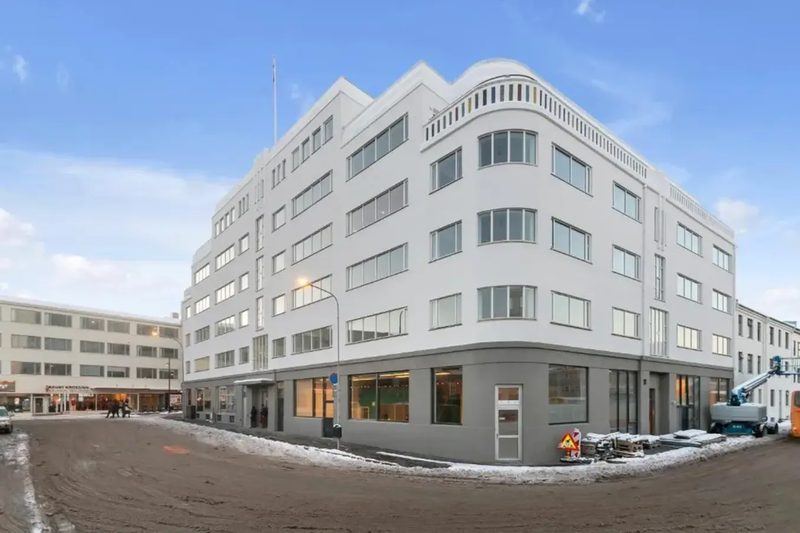
Iceland Parliament Hotel, Curio Collection by Hilton
From $280 / night
Check Prices on Trip.com →
Public Holidays in March
Dates that affect opening hours, transport and crowds
Skírdagur
Known in English as Maundy Thursday. Observed nationwide as a public holiday.
Föstudagurinn langi
Known in English as Good Friday. Observed nationwide as a public holiday.
Páskadagur
Known in English as Easter Sunday. Observed nationwide as a public holiday.
Annar í páskum
Known in English as Easter Monday. Observed nationwide as a public holiday.
Packing Checklist
Bookmark this page — your progress is saved between visits
Need the full list with shopping links?
Climate-specific gear, brand recommendations, and what to leave at home.
View Reykjavik Packing List →Essential Tips
Insider knowledge and common pitfalls to avoid
Insider Knowledge
The hot dog stand Baejarins Beztu Pylsur near the harbour has served since 1937. The order that matters is ein med ollu, one with everything. That means raw and crispy fried onion, ketchup, sweet mustard, and remoulade on a steamed bun. The lamb-and-pork dog snaps when you bite it. The queue moves fast. Eat it standing in the cold. Everyone else does.
Reykjavik's tap water is some of the cleanest on earth. It is drawn from glacial sources. A geothermal delivery system means the cold tap runs cold. The hot tap smells faintly of sulfur. That egg smell is harmless. It fades after a few seconds. Do not buy bottled water at any point during your trip. It is the single most unnecessary expense in a country where tap water is better than what most cities bottle and sell.
Laugavegur on a Friday or Saturday night after midnight is a different street. Icelanders pre-game at home because bar prices are steep. They arrive downtown around midnight. They stay until 4 or 5 AM. The energy concentrates into four or five blocks. The atmosphere is friendly, loud, and surprisingly unselfconscious for a city this small. If you want to experience Reykjavik's nightlife, adjust your clock. Showing up at 9 PM means drinking alone.
Check road.is every morning before driving anywhere outside the city. The Icelandic Road and Coastal Administration updates conditions in near real-time with colour-coded maps that show open, difficult, and closed segments. A clear forecast in Reykjavik means nothing about conditions on the South Coast or near Thingvellir. This is not overcautious advice: Icelanders check it daily as reflex, and March is the month when conditions swing the most unpredictably between passable and impassable.
Avoid These Mistakes
Underestimating the wind and packing for cold instead. Reykjavik in March rarely feels brutally cold in the way that, say, Scandinavian cities do, because temperatures hover close to freezing rather than plunging far below it. The wind is what makes it miserable. Visitors who pack a warm coat but not a windproof one spend most of their outdoor time hunched and unhappy. The wind also affects driving: high-profile rental cars catch crosswinds on exposed stretches of Route 1, and car doors can be ripped from your hands in car parks. Always open the door into the wind and hold it.
Booking a Northern Lights tour for the last night of the trip with no backup dates. Aurora activity is unpredictable and cloud cover in March can blank out the sky for three consecutive nights. Smart visitors book it on their first or second evening and use the rebooking buffer if weather cancels. Waiting until the final night turns a flexible experience into a coin flip, and the disappointment of missing them entirely because you ran out of evenings is avoidable.
Treating the whole month as one season. Early March and late March in Reykjavik are almost different trips. Early March has roughly nine and a half hours of daylight, reliable Northern Lights darkness, and ice cave access. Late March has nearly thirteen hours of daylight, longer windows for day trips. But diminishing aurora viewing time and some ice caves closing. Neither is better. But they serve different priorities, and visitors who don't decide which version of March they want sometimes end up with the wrong one.
Ready to plan your trip to Reykjavik?
Now that you've got the research covered, here's where to go next.
Explore More Activities in Reykjavik
Didn't see anything interesting yet?
Browse Viator's full catalog of tours, day trips, food experiences, and private guides in Reykjavik.
See All Reykjavik Tours on Viator